Defining Professional Driveway and Sidewalk Cleaning in Victorville
Professional driveway and sidewalk cleaning in Victorville, California, is defined by the precise calibration of water pressure to specific surface materials to prevent structural damage while removing deep-seated grime. This guide covers the technical standards, environmental compliance, and high desert adaptations required for safe and effective concrete restoration.
Pressure Washing Technique
Pressure washing is the process of using high-pressure water spray to remove loose material from a surface. In professional applications, the distinction between pressure washing and power washing is critical. Pressure washing uses unheated water, while power washing uses heated water. For concrete driveways and sidewalks, the unheated pressure washing method is often preferred to avoid thermal shock to the concrete matrix. The PSI (pounds per square inch) rating determines the force of the water. Residential concrete typically requires a range of 1,500 to 3,000 PSI. Exceeding this range can etch the surface, creating a rough texture that traps dirt more easily in the future.
PSI and GPM Calibration
The flow rate, measured in gallons per minute (GPM), works in tandem with PSI to determine cleaning efficiency. A machine with 3,000 PSI and 4 GPM delivers significantly more cleaning power than one with 3,000 PSI and 2 GPM. Professionals adjust these variables based on the severity of the stain. For light dust and pollen, lower settings suffice. For oil stains or deep organic growth, higher GPM and chemical pre-treatment are necessary. D Pressure Wash utilizes calibrated equipment to ensure that the force applied is sufficient for cleaning but safe for the substrate.
Nozzle Selection and Distance
Nozzle tip color indicates the spray pattern. A 25-degree yellow tip is the standard for concrete cleaning. It provides a wide enough fan to cover area quickly without concentrating force on a single point. Operators maintain a distance of 12 to 18 inches from the surface. Moving too close increases the risk of etching. Moving too far reduces the impact force, requiring multiple passes that waste water and time. Consistent movement and overlap are the hallmarks of a professional finish, ensuring no streaks or missed spots remain.
Environmental and Stormwater Compliance
Stormwater runoff is water that flows over land surfaces and into storm drains, eventually reaching local waterways without treatment. In California, the Industrial General Permit (IGP) regulates the discharge of pollutants from industrial activities, including commercial pressure washing. When a professional cleans a commercial driveway, the runoff containing detergents, oils, and biological matter must be captured and treated. It cannot be allowed to flow freely into the street storm drain. This is a legal requirement, not just a best practice.
Runoff Containment and Disposal
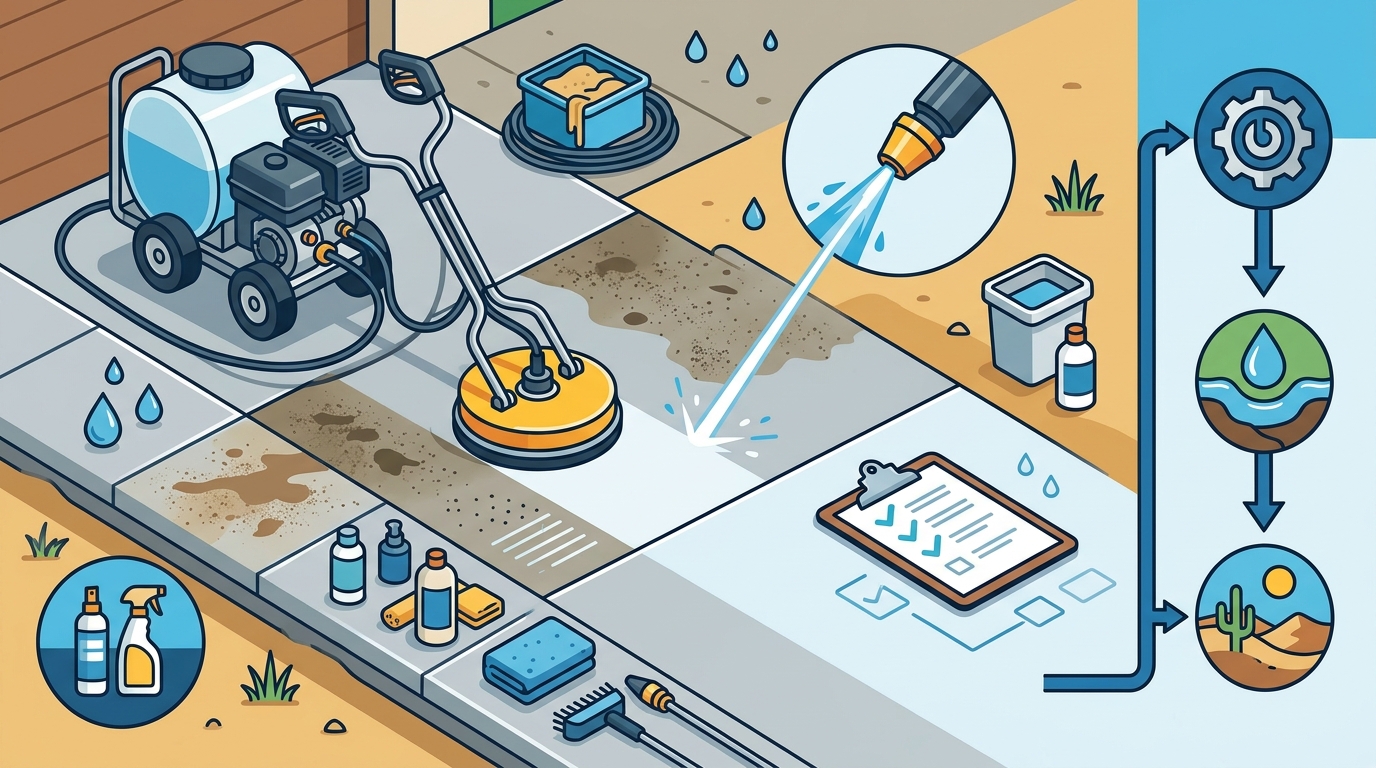
Professional operators use silt fences, absorbent booms, or vacuum recovery systems to capture runoff. The captured water is then disposed of at a licensed facility or treated on-site to meet discharge standards. For residential properties, the rules are less strict, but environmental responsibility remains a core value. D Pressure Wash prioritizes eco-friendly products that break down safely and minimize the environmental impact of the cleaning process. Proper disposal prevents the introduction of contaminants into the local watershed, protecting aquatic life and water quality.
Regulatory Standards
The Regional Water Quality Control Board enforces these regulations. Non-compliance can result in significant fines for both the operator and the property owner. Understanding these standards is a key differentiator for professional services. It demonstrates a commitment to legal and environmental stewardship. Homeowners and business owners should verify that their service provider understands and adheres to local stormwater regulations. This ensures that the cleaning process does not create secondary environmental liabilities.
High Desert Conditions
Victorville is located in the Mojave Desert, characterized by extreme temperature fluctuations and low humidity. These high desert conditions create unique challenges for concrete surfaces. The intense sun causes rapid drying of cleaning solutions, which can lead to streaking if not managed correctly. The low humidity also accelerates the growth of certain types of algae and moss in shaded areas, as these organisms thrive in the contrast between dry air and moist surfaces. Professionals must adapt their techniques to account for these environmental factors.
Temperature and Drying Rates
In the high desert, concrete surfaces can reach high temperatures during the day. Applying cold water to hot concrete can cause thermal shock, leading to micro-cracking. Professionals schedule cleaning for cooler parts of the day, such as early morning or late afternoon. They also use techniques that keep the surface wet long enough for the cleaning agents to work, preventing premature drying. This requires a different approach than in more temperate climates. The goal is to balance cleaning efficiency with surface safety.
Dust and Pollen Accumulation
The arid environment generates significant amounts of fine dust and pollen. This particulate matter settles on concrete surfaces, creating a layer of grime that is difficult to remove with simple hosing. Pressure washing is the most effective method for removing this accumulation. The high-pressure water dislodges the fine particles from the pores of the concrete. Regular cleaning prevents the buildup from becoming permanent. D Pressure Wash is experienced in handling the specific types of dust and pollen found in the Victorville area, ensuring a thorough and long-lasting clean.
Surface Specific Methodologies
Concrete is not a uniform material. Different types of concrete, such as stamped, stained, or sealed, require different cleaning approaches. A one-size-fits-all method can lead to damage or inconsistent results. Professionals assess the surface type before beginning the cleaning process. This assessment determines the appropriate PSI, nozzle, and chemical agents to use. Understanding the specific methodology for each surface type is a mark of professional expertise.
Stamped and Stained Concrete
Stamped concrete is designed to mimic the look of stone or brick. The texture is integral to its aesthetic appeal. High-pressure water can erode the texture, reducing the visual impact of the pattern. Professionals use lower PSI settings and wider nozzles for stamped concrete. They also avoid harsh chemical agents that can strip the color from stained concrete. The goal is to clean the surface without altering its appearance. This requires a delicate balance of force and chemistry.
Sealed Concrete
Sealed concrete has a protective coating that repels water and stains. Pressure washing can remove this sealant if the pressure is too high. Once the sealant is removed, the concrete is exposed to the elements and will stain more easily. Professionals use a lower PSI setting to clean sealed concrete without stripping the sealant. They may also recommend re-sealing the surface after cleaning to restore the protective layer. This ensures that the concrete remains protected and looks its best for longer.
| Surface Type | Recommended PSI | Nozzle Tip | Key Consideration |
|---|---|---|---|
| Plain Concrete | 2,500 - 3,000 | 25-degree | Standard cleaning, high efficiency |
| Stamped Concrete | 1,500 - 2,000 | 40-degree | Preserve texture and pattern |
| Sealed Concrete | 1,000 - 1,500 | 40-degree | Protect sealant layer |
| Stained Concrete | 1,500 - 2,000 | 25-degree | Avoid color stripping |
Key Takeaways
- Professional cleaning is defined by the precise calibration of PSI and GPM to the specific surface material.
- Stormwater compliance is a legal requirement in California, requiring the capture and proper disposal of runoff.
- High desert conditions in Victorville, such as extreme heat and low humidity, require adjusted cleaning schedules and techniques.
- Different concrete types, such as stamped and sealed, require different pressure settings to prevent damage.
- Eco-friendly products and proper disposal methods minimize the environmental impact of pressure washing.
- Regular cleaning prevents the buildup of dust and pollen, which is common in arid environments.
- Choosing a professional service ensures that the cleaning process is safe, effective, and compliant with local regulations.
Frequently Asked Questions
What is the difference between pressure washing and power washing?
Pressure washing uses unheated water, while power washing uses heated water. For concrete, pressure washing is often preferred to avoid thermal shock.
Is pressure washing safe for all types of concrete?
No, the pressure must be adjusted based on the type of concrete. Stamped and sealed concrete require lower pressure to prevent damage.
How often should I have my driveway pressure washed?
In the high desert, it is recommended to have your driveway pressure washed once or twice a year to prevent dust and pollen buildup.
What happens to the runoff from pressure washing?
Professional operators capture the runoff and dispose of it at a licensed facility or treat it on-site to meet environmental standards.
Can I pressure wash my driveway myself?
Yes, but it requires the right equipment and knowledge. Without proper calibration, you can damage the concrete or violate environmental regulations.
Does D Pressure Wash use eco-friendly products?
Yes, D Pressure Wash utilizes eco-friendly products that are safe for the environment and break down safely.
Conclusion
Professional driveway and sidewalk cleaning in Victorville is defined by technical precision, environmental responsibility, and adaptation to local conditions. By understanding the specific requirements of pressure washing, stormwater compliance, and high desert conditions, you can ensure that your property is cleaned safely and effectively. D Pressure Wash provides these expert services, ensuring that your concrete surfaces are restored to their best condition without causing damage or environmental harm. For more information on our services, visit D Pressure Wash.