Standard pressure washing often fails to remove heavy oil stains from driveways. Effective removal requires a combination of chemical degreasers, adequate dwell time, and poultice treatments tailored to the specific surface material. This guide explains why simple rinsing is insufficient and details the professional methods used to restore concrete, asphalt, and stone surfaces to their original condition.
Understanding Chemical Degreasers
Pressure washing alone relies on kinetic energy to dislodge dirt, but oil is a hydrophobic substance that repels water. To address this, professionals utilize chemical degreasers. A degreaser is a specialized cleaning agent designed to break down and emulsify hydrocarbon-based contaminants like motor oil, grease, and transmission fluid. These chemicals work by reducing the surface tension of the oil, allowing it to mix with water and be lifted from the porous surface of the driveway.
Types of Degreasers
There are two primary categories of degreasers used in professional driveway cleaning: alkaline and acidic. Alkaline degreasers are the most common for residential applications. They are highly effective against fresh oil and grease stains and are generally safe for most concrete surfaces when used correctly. Acidic cleaners are typically reserved for mineral deposits or rust stains rather than organic oils. Using the wrong type of chemical can lead to surface etching or discoloration, which is why professional assessment is critical before applying any treatment.
Application Techniques
Proper application is as important as the chemical itself. Degreasers must be applied evenly to the stained area, ensuring full coverage. In many cases, a soft-bristle brush is used to agitate the chemical into the pores of the concrete. This mechanical action helps the chemical penetrate deeper into the substrate. At D Pressure Wash, we select the appropriate degreaser based on the age of the stain and the specific material of the driveway, ensuring maximum efficacy without causing damage.
The Critical Role of Chemical Dwell Time
Dwell time is the duration a cleaning chemical remains in contact with a surface before being rinsed away. This period is crucial for the chemical reaction to fully break down the oil molecules. If a degreaser is rinsed off too quickly, it may only remove the surface film of the oil, leaving the deeper penetration intact. This results in a stain that appears lighter but remains visible, especially in direct sunlight.
Optimal Dwell Durations
The ideal dwell time varies depending on the concentration of the chemical and the severity of the stain. For fresh oil spills, a dwell time of 5 to 10 minutes may be sufficient. However, for older, set-in stains that have cured into the concrete, dwell times of 15 to 30 minutes are often necessary. During this period, the chemical continues to work at a molecular level. It is essential to keep the surface moist during this time to prevent the chemical from drying out, which can cause it to become ineffective or leave residue.
Monitoring the Reaction
Experienced technicians monitor the surface during the dwell period. They look for signs that the oil is lifting, such as a change in color or the formation of a milky emulsion. If the stain does not lift within the recommended time, the chemical may need to be reapplied or a stronger solution used. Rushing this step is a common mistake in DIY cleaning that leads to poor results. Professional services ensure that the dwell time is optimized for each specific stain, balancing effectiveness with surface safety.
Poultice Treatment for Deep Penetration
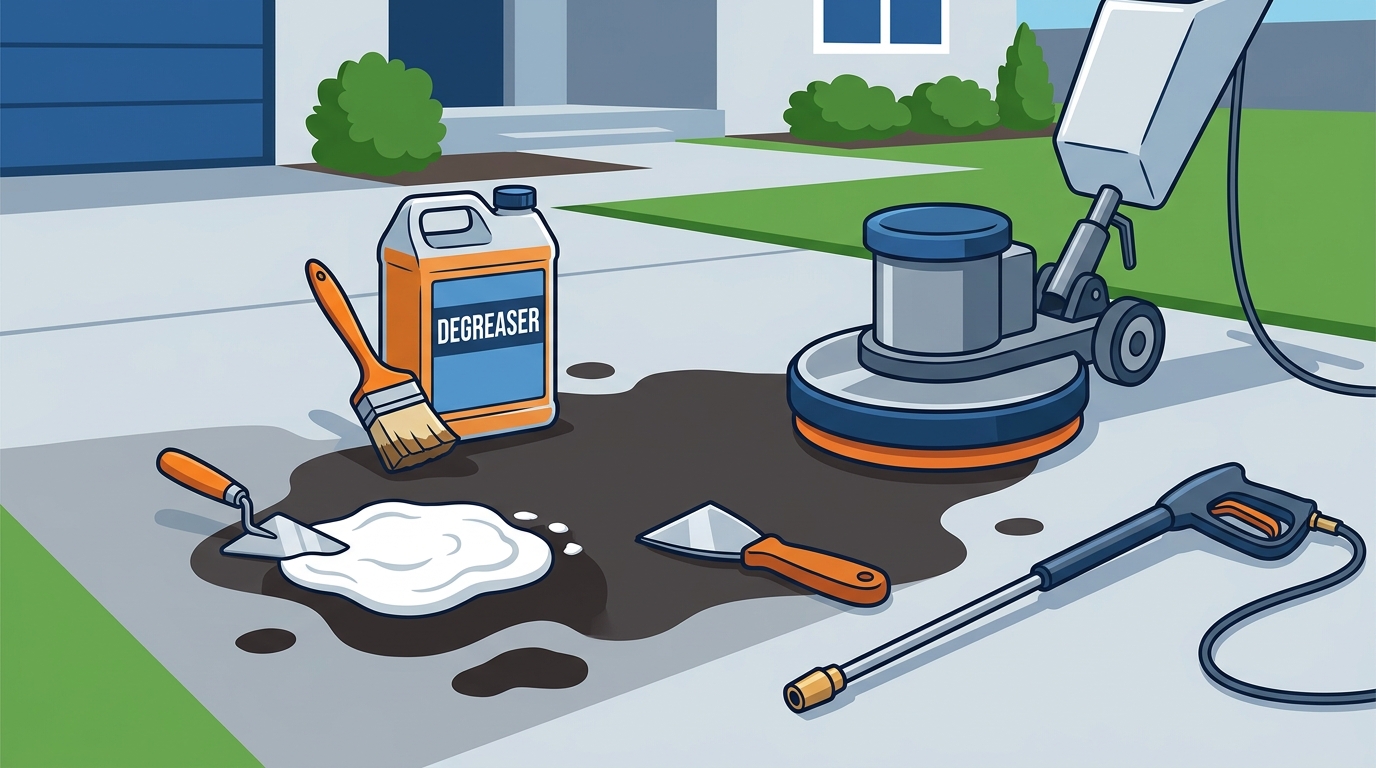
When oil has penetrated deeply into porous materials like concrete or natural stone, liquid degreasers may not reach the core of the stain. In these cases, a poultice treatment is employed. A poultice is a paste-like mixture of an absorbent material and a solvent or cleaning agent. This mixture is applied directly to the stain and allowed to dry. As it dries, the absorbent material draws the oil out of the pores of the surface and traps it within the poultice.
How Poultices Work
The mechanism behind poultice treatment is capillary action. The absorbent material in the poultice creates a strong suction that pulls the liquid contaminants out of the substrate. This is particularly effective for older stains where the oil has migrated deep into the material. Once the poultice has dried completely, it is carefully removed, taking the trapped oil with it. This process may need to be repeated multiple times for severe stains, but it is often the only way to achieve a complete removal.
Application and Removal
Applying a poultice requires precision. The mixture must be thick enough to stay in place but thin enough to penetrate the surface. It is typically spread to a thickness of about a quarter inch and covered with plastic wrap to prevent it from drying too quickly on the edges. After the drying period, which can last from 24 to 48 hours, the poultice is peeled off. The removed material will often be darkened by the extracted oil. This method is labor-intensive but highly effective for stubborn stains that resist standard chemical treatments.
Surface Material Considerations
The type of material used in the driveway construction dictates the cleaning approach. Different materials have varying levels of porosity and chemical resistance. Understanding these properties is essential for selecting the right cleaning method and avoiding damage.
Concrete Driveways
Concrete is a porous material that readily absorbs oil. It is the most common driveway material in residential areas. Because of its porosity, concrete requires aggressive cleaning methods for deep stains. Alkaline degreasers are generally safe for concrete, but acidic cleaners must be used with caution to avoid etching the surface. Pressure washing is effective for removing the bulk of the stain after chemical treatment, but the PSI (pounds per square inch) must be adjusted to avoid chipping the surface.
Asphalt Driveways
Asphalt is also porous but is more sensitive to high-pressure water. High PSI can dislodge the aggregate stones from the asphalt surface, leading to pitting and deterioration. For asphalt, lower pressure settings and softer nozzles are recommended. Chemical dwell time is critical for asphalt, as the oil can penetrate deeply into the binder. Poultice treatments are often the preferred method for asphalt to avoid the risk of surface damage from high-pressure washing.
Natural Stone and Pavers
Natural stone and pavers vary widely in their porosity and chemical resistance. Some stones, like limestone, are highly porous and sensitive to acidic cleaners. Others, like granite, are more durable but can still absorb oil. For these materials, gentle cleaning methods are essential. Low-pressure washing and specialized stone-safe degreasers are recommended. Poultice treatments are often the safest option for deep stains on natural stone, as they minimize the risk of surface damage.
Method Comparison Table
| Method | Best For | Effectiveness on Deep Stains | Risk of Surface Damage |
|---|---|---|---|
| Standard Pressure Washing | Surface dirt and light stains | Low | Medium (if PSI too high) |
| Chemical Degreaser + Rinse | Fresh to moderate oil stains | Medium | Low (if correct chemical used) |
| Poultice Treatment | Deep, set-in oil stains | High | Very Low |
| Combined Approach | Severe, multi-layer stains | Very High | Low (with professional application) |
Key Takeaways
- Standard pressure washing is ineffective for heavy oil stains because oil repels water.
- Chemical degreasers are necessary to break down and emulsify hydrocarbon-based contaminants.
- Dwell time is critical; rushing the rinse can leave deep stains intact.
- Poultice treatments are the most effective method for deep penetration in porous materials.
- Surface material dictates the cleaning approach; asphalt requires lower pressure than concrete.
- Professional assessment is essential to select the right chemical and pressure settings.
- Combining chemical treatment with poultice and pressure washing yields the best results for severe stains.
- DIY attempts often fail due to incorrect chemical selection or insufficient dwell time.
Frequently Asked Questions
Can I use a household degreaser on my driveway?
Household degreasers are often too weak to handle heavy, set-in oil stains on driveways. Professional-grade degreasers are formulated to penetrate deeper into porous surfaces and break down cured oil. Using a household product may remove the surface film but will likely leave the stain visible. For best results, use a professional-grade product or hire a service provider.
How long does it take to remove a deep oil stain?
The time required depends on the depth of the stain and the method used. A chemical degreaser with dwell time may take 30 minutes to an hour. A poultice treatment can take 24 to 48 hours to dry and remove. Severe stains may require multiple applications of poultice over several days. Professional services can provide a more accurate timeline based on the specific condition of the stain.
Will pressure washing damage my asphalt driveway?
High-pressure washing can damage asphalt by dislodging the aggregate stones. It is essential to use a lower PSI setting and a wider nozzle for asphalt. Professional technicians adjust their equipment settings based on the surface material to ensure effective cleaning without causing damage. If you are unsure, it is best to consult a professional before attempting to clean an asphalt driveway.
What is a poultice and how does it work?
A poultice is a paste made from an absorbent material and a cleaning solvent. It is applied to the stain and allowed to dry. As it dries, it draws the oil out of the pores of the surface and traps it within the poultice. Once dry, the poultice is removed, taking the oil with it. This method is highly effective for deep stains in porous materials like concrete and natural stone.
How often should I clean my driveway?
Regular maintenance cleaning every 6 to 12 months can prevent the buildup of dirt and light stains. However, heavy oil stains require immediate attention to prevent them from setting in. The more quickly you address a spill, the easier it is to remove. Regular cleaning also helps maintain the appearance and longevity of your driveway.
Can I prevent oil stains on my driveway?
Prevention is the best strategy. Use drip pans under vehicles, clean up spills immediately, and consider applying a sealant to your driveway. Sealants create a barrier that makes it harder for oil to penetrate the surface. Regular sealing, typically every 2 to 3 years, can significantly reduce the risk of permanent stains.
Is it worth hiring a professional for oil stain removal?
For deep, set-in stains, hiring a professional is often worth the investment. Professionals have the right equipment, chemicals, and expertise to remove stains that DIY methods cannot. They can also assess the condition of your driveway and recommend the best long-term maintenance strategy. Attempting to remove deep stains yourself can lead to wasted time, money, and potential damage to the surface.
Conclusion
Removing heavy oil stains from a driveway requires more than just a standard rinse. It demands a strategic approach that combines chemical degreasers, adequate dwell time, and poultice treatments tailored to the specific surface material. By understanding the science behind these methods, homeowners can make informed decisions about their driveway maintenance. For those facing stubborn stains, professional services offer the expertise and equipment needed to achieve a complete restoration. D Pressure Wash provides specialized driveway cleaning services in Victorville, California, ensuring that your property looks its best. To schedule an appointment or learn more about our services, visit our contact page.