Driveway Oil Stain Removal: The Ultimate Guide for Victorville Homeowners
Standard pressure washing often fails to remove heavy oil stains from driveways. To effectively eliminate deep-set petroleum residues, you must combine high-pressure water with specialized degreasers, adequate chemical dwell time, and poultice treatments. This guide explains why a standard rinse is insufficient for oil and details the professional methods required to restore your concrete or asphalt surface.
The Role of Degreasers in Oil Removal
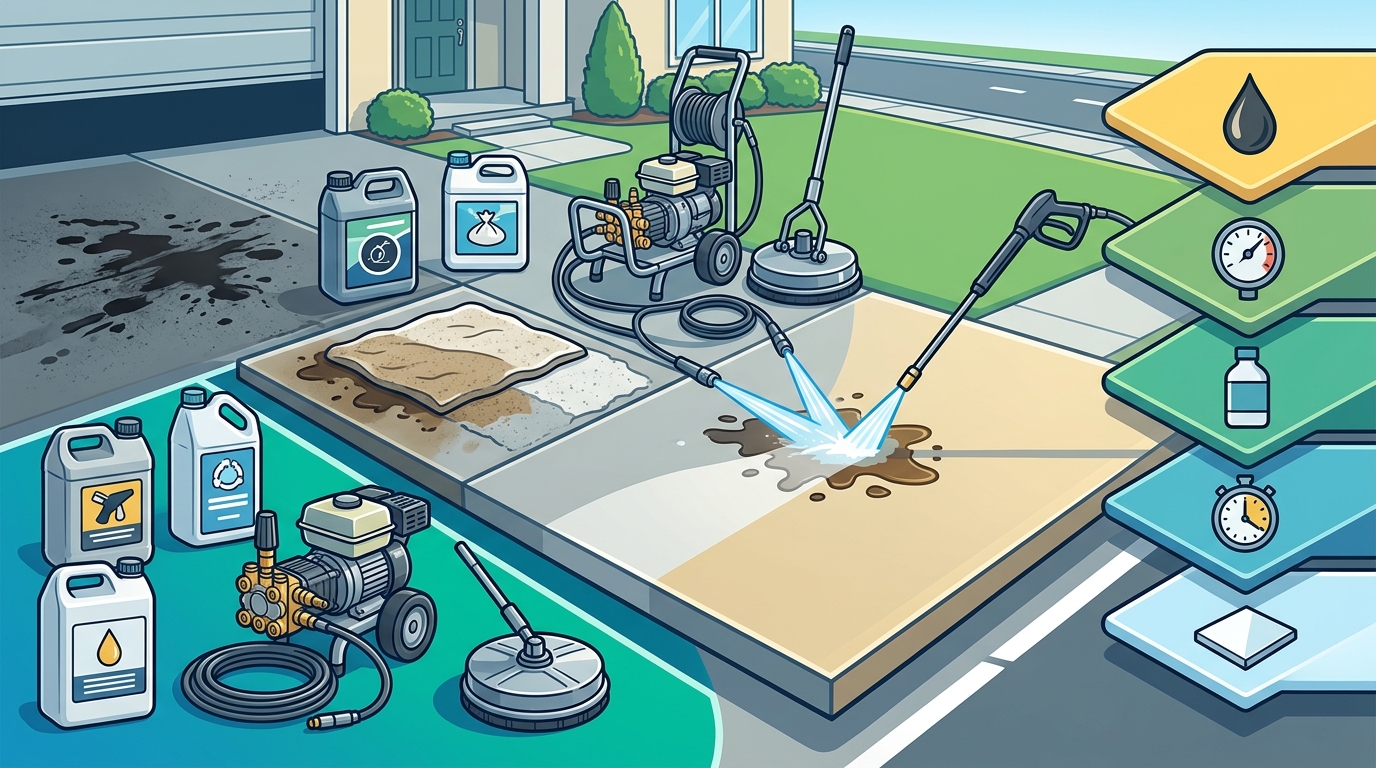
Pressure washing relies on kinetic energy to dislodge dirt, but oil is a hydrophobic substance that repels water. A standard rinse cannot break the molecular bonds of petroleum products. Driveway degreaser is a specialized chemical solution designed to emulsify and lift oil from porous surfaces. When applied correctly, these agents penetrate the surface, surround the oil droplets, and allow them to be flushed away by water pressure.
Types of Degreasers
Professional operators select degreasers based on the severity of the stain and the surface type. Alkaline degreasers are highly effective for fresh oil and grease, breaking down the fats and hydrocarbons. For older, oxidized stains, acidic or solvent-based cleaners may be required to dissolve the hardened residue. Using the wrong type of chemical can lead to ineffective cleaning or potential surface damage.
Application Techniques
Application is critical for success. The degreaser must be applied evenly to the stained area, ensuring full coverage. Professionals often use low-pressure sprayers to apply the chemical before introducing high-pressure water. This ensures the cleaner has direct contact with the stain without being immediately washed away. Driveway pressure washing services in Victorville often include this chemical application step to ensure thorough results.
Understanding Chemical Dwell Time
Chemical dwell time is the period during which a cleaning solution remains in contact with the surface before rinsing. This phase is essential for the chemical reaction to occur. If you rinse the surface immediately after applying a degreaser, the chemical has not had enough time to break down the oil. The result is a surface that looks wet but remains stained once dry.
Optimal Dwell Durations
The required dwell time varies depending on the product and the age of the stain. Fresh oil stains may require only 5 to 10 minutes of contact. Older, set-in stains can require 15 to 30 minutes or longer. It is crucial to follow the manufacturer's instructions for the specific product used. Allowing the chemical to dry on the surface can cause it to bond with the dirt, making removal more difficult and potentially leaving a residue.
Monitoring the Reaction
During the dwell time, the surface should be monitored. You may notice the oil beginning to lift or the color of the stain changing. If the chemical begins to dry, it should be lightly misted with water to keep it active. This step ensures the chemical remains effective throughout the entire contact period. Professional services manage this timing precisely to maximize cleaning efficiency.
Poultice Treatment for Deep Penetration
For stains that have penetrated deep into the pores of concrete or asphalt, surface-level cleaning may not be enough. Poultice treatment is a method used to draw out contaminants from deep within the substrate. This technique involves applying a absorbent material mixed with a solvent to the stained area. The poultice acts like a sponge, pulling the oil out of the pores as the solvent evaporates.
How Poultice Works
The process relies on capillary action. The absorbent material in the poultice creates a path for the oil to travel from the deep pores to the surface of the poultice. As the solvent evaporates, it carries the oil with it. This method is particularly effective for asphalt driveways, which are more porous than concrete. It is a slower process than pressure washing but is often necessary for permanent stain removal.
Application and Removal
Applying a poultice requires careful preparation. The area must be clean and dry before the poultice is applied. The mixture is spread thickly over the stain and covered with plastic wrap to slow evaporation. After the poultice dries completely, it is removed and disposed of properly. This step may need to be repeated for severe stains. Rust removal and other specialized cleaning services often utilize similar deep-cleaning techniques to address stubborn residues.
Surface Material Considerations
The type of material your driveway is made of dictates the cleaning method you should use. Concrete and asphalt react differently to pressure and chemicals. Understanding these differences is key to avoiding damage while achieving a clean result. Choosing the wrong method can lead to etching, spalling, or further staining.
Concrete Driveways
Concrete is a dense, non-porous material when properly sealed. However, unsealed concrete is porous and can absorb oil. High-pressure washing is generally safe for concrete if the correct nozzle and distance are used. The goal is to clean the surface without eroding the top layer. Degreasers work well on concrete, but the dwell time must be managed to prevent chemical etching. Sidewalk pressure washing follows similar principles, as concrete sidewalks share the same material properties as driveways.
Asphalt Driveways
Asphalt is a porous, bitumen-based material. It is more susceptible to damage from high-pressure water. Excessive pressure can strip away the top layer of aggregate, leaving a rough, uneven surface. For asphalt, lower pressure settings and softer nozzles are recommended. Chemical dwell time is critical, as asphalt can absorb chemicals quickly. Poultice treatments are often the preferred method for deep oil stains on asphalt to avoid physical damage.
Sealed vs. Unsealed Surfaces
The presence of a sealer significantly impacts cleaning. Sealed surfaces repel water and oil, making stains easier to remove. Unsealed surfaces absorb contaminants, requiring more aggressive chemical treatment. If your driveway is unsealed, consider applying a sealer after cleaning to protect the surface in the future. This protective layer will make future cleaning easier and extend the life of your driveway.
Method Comparison: Standard Rinse vs. Professional Treatment
The following table compares the effectiveness of a standard pressure wash rinse versus a professional multi-step treatment for heavy oil stains.
| Method | Effectiveness on Fresh Oil | Effectiveness on Old Oil | Risk of Surface Damage | Time Required |
|---|---|---|---|---|
| Standard Pressure Rinse | Low | Very Low | Low (if pressure is correct) | 15-30 minutes |
| Pressure Wash + Degreaser | High | Moderate | Moderate (chemical etching risk) | 45-60 minutes |
| Poultice Treatment | Moderate | High | Low | 24-48 hours |
This comparison highlights why a standard rinse is often insufficient for heavy oil stains. Professional treatments combine multiple methods to address both surface and deep-set contaminants. The choice of method depends on the age of the stain and the type of surface material.
Key Takeaways
- Standard pressure washing cannot remove heavy oil stains due to the hydrophobic nature of oil.
- Driveway degreasers are essential for emulsifying and lifting oil from porous surfaces.
- Chemical dwell time must be sufficient to allow the cleaning reaction to occur.
- Poultice treatment is effective for deep-set stains, particularly on asphalt.
- Concrete and asphalt require different pressure settings to avoid damage.
- Sealed surfaces are easier to clean and protect against future staining.
- Professional services manage the timing and chemical selection for optimal results.
- Combining methods often yields the best results for severe oil stains.
Frequently Asked Questions
Can I use a standard pressure washer to remove oil stains?
A standard pressure washer alone is not effective for removing heavy oil stains. You must use a degreaser in conjunction with the pressure washer to break down the oil. The water pressure then flushes away the emulsified oil.
How long should I let the degreaser sit on the driveway?
The dwell time depends on the product and the age of the stain. Generally, you should allow the degreaser to sit for 10 to 30 minutes. Always follow the manufacturer's instructions for the specific product you are using.
Is poultice treatment safe for all driveway materials?
Poultice treatment is generally safe for both concrete and asphalt. However, it is particularly effective for asphalt, which is more porous. For concrete, pressure washing with a degreaser is often sufficient for most stains.
What happens if I rinse the degreaser off too soon?
If you rinse the degreaser off too soon, the chemical will not have enough time to break down the oil. The stain will likely remain on the surface. You may need to reapply the degreaser and allow for a longer dwell time.
Can high pressure damage my asphalt driveway?
Yes, high pressure can damage asphalt by stripping away the top layer of aggregate. It is recommended to use a lower pressure setting and a wider nozzle when cleaning asphalt driveways.
Should I seal my driveway after cleaning?
Sealing your driveway after cleaning is highly recommended. A sealer protects the surface from future oil stains and makes cleaning easier. It also enhances the appearance of the driveway.
How often should I clean my driveway?
The frequency of cleaning depends on the amount of traffic and the type of surface. Generally, cleaning your driveway once or twice a year is sufficient to maintain its appearance and prevent deep-set stains.
What is the best way to remove old, set-in oil stains?
For old, set-in oil stains, a combination of degreaser and poultice treatment is often the most effective method. The degreaser breaks down the surface oil, while the poultice draws out the deep-set contaminants.
Conclusion
Removing heavy oil stains from your driveway requires more than a standard pressure wash rinse. By understanding the role of degreasers, the importance of chemical dwell time, and the benefits of poultice treatment, you can achieve a cleaner and more durable surface. D Pressure Wash offers professional pressure washing services in Victorville, California, ensuring that your driveway is cleaned safely and effectively. Contact us today to schedule an appointment and restore the curb appeal of your home.