
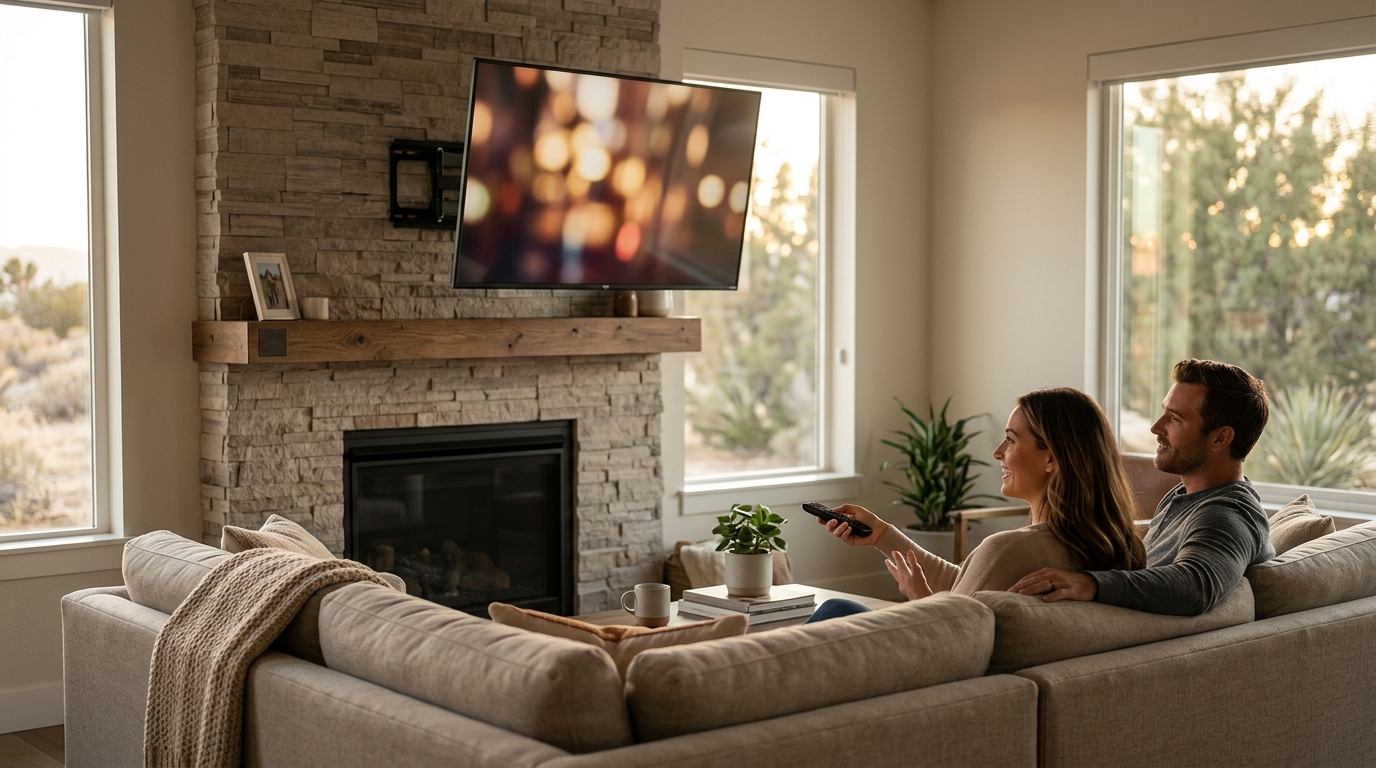
Victorville homeowners have multiple TV mounting installation options, ranging from fixed wall plates to full-motion articulating arms. This guide covers bracket types, wall surface compatibility, cable management, local service providers, and fireplace mounting. It provides a comprehensive overview of what to expect when upgrading your home entertainment setup in the High Desert region. For additional details, review the Professional Pressure Washing Services.
Mounting Bracket Types
Choosing the right bracket is the first critical step in any installation. The bracket determines how your television sits on the wall and how much flexibility you have in viewing angles. There are three primary categories of brackets used in residential settings. For additional details, review the Professional Lawn Mowing Services.
Fixed Brackets
A fixed bracket is a rigid plate that holds the TV flush against the wall. This option is ideal for dedicated media rooms or living spaces where the primary viewing position is directly in front of the screen. Fixed brackets are typically the most affordable and offer the cleanest aesthetic profile because they do not have visible mechanical arms. For additional details, review the Victorville Rust Removal Services.
Full-Motion Articulating Arms
A full-motion bracket is a mechanical arm system that allows the TV to extend away from the wall and swivel left or right. This type is best for open-concept living areas or kitchens where viewers may sit at different angles. These brackets often include tilt capabilities, allowing you to adjust the vertical angle to reduce glare from windows.
Corner Brackets
A corner bracket is designed specifically for mounting a TV on a wall that meets another wall at a 90-degree angle. These brackets allow the screen to pivot into the room, making them a practical solution for smaller spaces or awkward room layouts common in older Victorville homes.
Wall Surface Compatibility
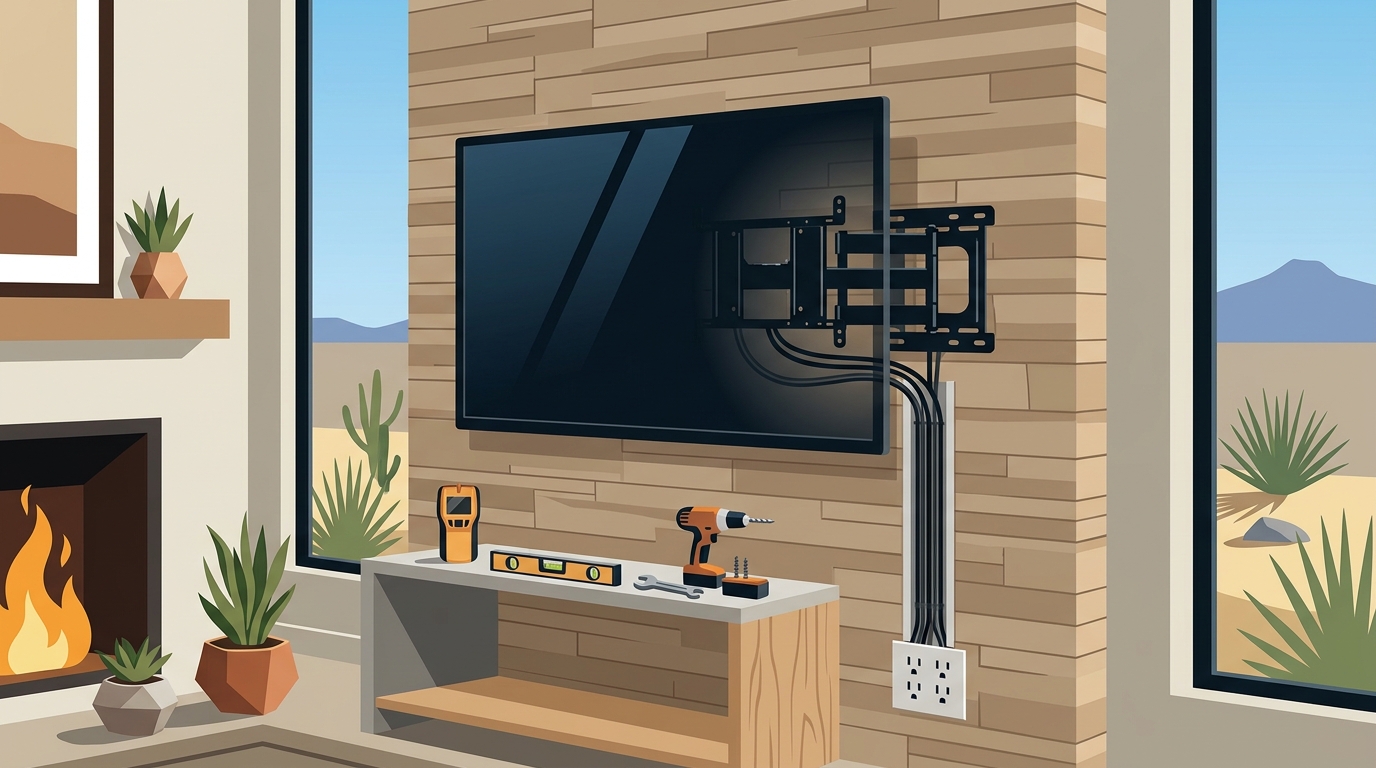
Not all walls are created equal, and the structural integrity of your wall surface dictates which mounting options are safe. Understanding your wall composition is essential before purchasing a bracket or scheduling an installation.
Drywall and Studs
Concrete and Masonry
Some properties in the High Desert have concrete block or masonry walls. Mounting to these surfaces requires specialized masonry anchors and a hammer drill. While concrete is incredibly strong, it is brittle. Incorrect drilling can crack the block, so precision is key. If your wall is masonry, ensure your bracket is rated for masonry installation.
Load-Bearing Considerations
Cable Management Options
A clean installation is defined by how well the cables are hidden. Visible wires can detract from the aesthetic of a modern home. There are several methods to manage the power and signal cables running from the TV to the wall outlet.
In-Wall Raceways
In-wall raceways are hollow channels that run inside the drywall. The cable is fed through the wall cavity and exits at the bottom of the TV or the outlet. This method provides the cleanest look but requires cutting into the drywall and potentially opening the outlet plate. It is a more complex installation that is best left to professionals.
Surface Raceways and Clips
Surface raceways are plastic channels that adhere to the wall surface. They are a non-invasive solution that can be painted to match the wall color. Cable clips are smaller, individual holders that can be spaced along the wall to keep wires neat. These are cost-effective and easy to install, making them a popular choice for renters or those who want a quick fix.
Power Cables and Adapters
Modern TVs often have power ports on the back, which can make routing difficult. Low-profile power adapters and right-angle plugs can help the cable sit flush against the wall. Some brackets include built-in cable channels that guide the wire from the back of the TV to the wall, reducing the need for external raceways.
Local Service Providers
While DIY installation is possible, hiring a local professional ensures safety and precision. In Victorville, homeowners have access to specialized service providers who understand the local housing stock and building codes.
Why Hire a Professional
Professional installers bring the right tools, including stud finders, laser levels, and appropriate drill bits. They also carry liability insurance, protecting your home in case of accidental damage. A professional can assess the wall structure and recommend the best bracket for your specific TV model and room layout.
D Pressure Wash Services
While D Pressure Wash is primarily known for its pressure washing and property maintenance services in Victorville, the company offers a range of home improvement solutions. Their team is experienced in handling various home projects, ensuring that your property is maintained to a high standard. For those looking for a trusted local provider, D Pressure Wash provides reliable service with a focus on customer satisfaction. You can learn more about their comprehensive service offerings on their main website.
Fireplace Mounting
Heat Management
Modern TVs are sensitive to heat. If the fireplace is used frequently, the temperature near the mantel can rise significantly. It is crucial to check the manufacturer's operating temperature range for your TV. If the heat is a concern, consider a mantel mount that allows the TV to be lowered or tilted away from the heat source. Some homeowners opt for a fixed mount at a higher position to keep the TV out of the direct heat zone.
Viewing Angle and Ergonomics
Mounting a TV above a fireplace often results in a high viewing position, which can cause neck strain. To mitigate this, a full-motion bracket with a tilt feature is recommended. This allows you to angle the screen downward, bringing the center of the display closer to eye level when seated. It is important to measure the distance from the floor to the mantel and the height of your seating to determine the optimal mount height.
Structural Integrity of the Mantel
Comparison of Mounting Options
| Bracket Type | Best For | Flexibility | Complexity |
|---|---|---|---|
| Fixed | Dedicated media rooms | None | Low |
| Full-Motion | Open-concept living areas | High (Swivel/Tilt/Extend) | Medium |
| Corner | Small spaces/corners | Medium (Pivot) | Medium |
| Mantel | Fireplace surrounds | Variable (Tilt/Lower) | High |
Key Takeaways
- Fixed brackets are the most affordable and offer the cleanest look for dedicated viewing areas.
- Full-motion brackets provide maximum flexibility for open-concept spaces but require more wall clearance.
- Always anchor heavy TVs into wall studs, not just drywall, to ensure safety.
- Concrete and masonry walls require specialized anchors and drilling techniques.
- In-wall raceways provide the cleanest cable management but are more complex to install.
- Surface raceways are a cost-effective, non-invasive alternative for cable hiding.
- Fireplace mounts require careful consideration of heat and viewing angles.
- Hiring a local professional ensures proper installation and protects your home.
Frequently Asked Questions
What is the best bracket for a TV above a fireplace?
A full-motion mantel mount is generally the best option for fireplace installations. It allows you to tilt the screen downward for a better viewing angle and can sometimes lower the TV to reduce heat exposure. Fixed mounts are less ideal because they do not allow for angle adjustment.
Can I mount a TV on a concrete wall?
Yes, you can mount a TV on a concrete wall, but it requires masonry anchors and a hammer drill. The bracket must be rated for masonry installation. It is important to use the correct size anchors to ensure the mount is secure.
How much weight can a drywall anchor hold?
Standard drywall anchors typically hold between 25 and 50 pounds. For TVs heavier than this, it is recommended to anchor into the wall studs. Heavy-duty drywall anchors can hold more, but studs are always the safer option for large displays.
Do I need to hire a professional for TV mounting?
While DIY is possible, hiring a professional is recommended for larger TVs, complex wall surfaces, or in-wall cable management. Professionals have the right tools and experience to ensure a safe and clean installation.
What is the difference between a fixed and a full-motion bracket?
A fixed bracket holds the TV flush against the wall with no movement. A full-motion bracket allows the TV to extend, swivel, and tilt, providing greater flexibility in viewing angles. Full-motion brackets are more expensive and require more clearance from the wall.
How do I hide cables when mounting a TV?
You can hide cables using in-wall raceways, surface raceways, or cable clips. In-wall raceways provide the cleanest look but require cutting into the drywall. Surface raceways are easier to install and can be painted to match the wall.