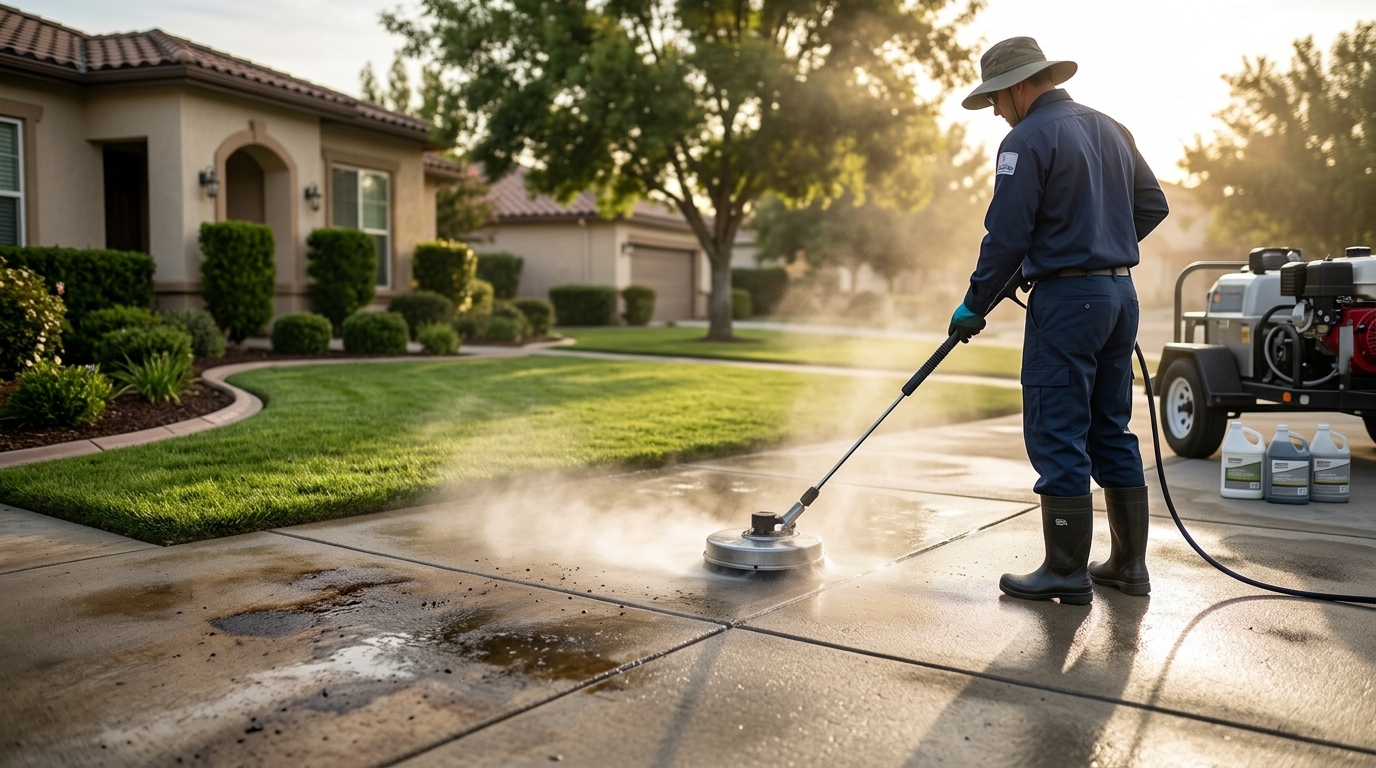
For homes with heavy oil stains, a standard rinse is insufficient. The most effective method combines a dedicated concrete degreaser with a high-pressure washing system operating at 2,500 to 3,000 PSI. This guide covers the specific chemical, mechanical, and timing techniques required to lift stubborn petroleum-based residues from concrete surfaces. For additional details, review the Professional Lawn Mowing Services.
Concrete Degreasers
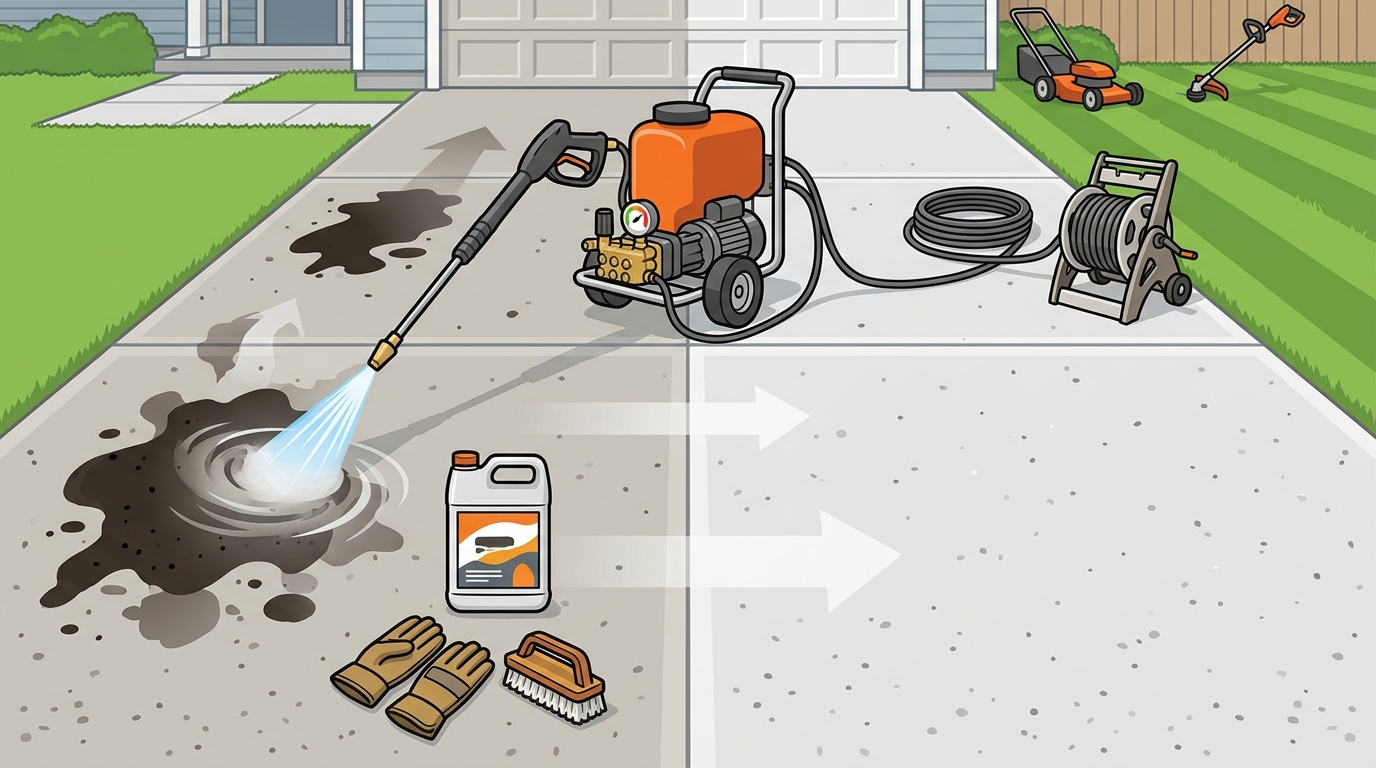
Concrete degreaser is a specialized chemical formulation designed to break down hydrocarbon bonds in oil and grease. Unlike standard household detergents, these products contain surfactants and solvents that penetrate the porous structure of concrete. When applied to a driveway, the chemical reacts with the oil, lifting it from the aggregate and cement matrix.
Choosing the Right Chemical
Not all degreasers are created equal. For heavy, aged oil stains, you need a product with a high concentration of active ingredients. Look for degreasers that specify they are safe for concrete and do not contain harsh acids that can etch the surface. The goal is to emulsify the oil so it can be rinsed away or extracted.
Application Strategy
Application requires precision. You should apply the degreaser directly to the stain, ensuring full coverage. Avoid applying it to the surrounding clean concrete, as this can create a visible halo effect once the area is rinsed. The chemical needs to make direct contact with the oil to initiate the breakdown process.
The Poultice Method
The poultice method is a physical extraction technique used for deep-set stains that chemicals alone cannot remove. A poultice is a mixture of an absorbent material and a solvent that draws the stain out of the substrate. This method is particularly effective for oil that has penetrated deep into the concrete pores.
Creating the Poultice
To create a poultice, you mix an absorbent material, such as diatomaceous earth or cellulose, with a solvent like acetone or a specialized degreaser. The mixture should have the consistency of peanut butter. This paste is applied thickly over the stain and covered with plastic wrap to prevent the solvent from evaporating too quickly.
Removal Process
Once the poultice dries, it hardens and pulls the oil out of the concrete with it. You then scrape the dried material away. This process may need to be repeated several times for heavy stains. It is a slow but highly effective method for restoring the original color of the concrete.
Pressure Washing PSI
Pressure washing PSI, or pounds per square inch, measures the force of the water stream. For concrete driveways, the ideal range is typically between 2,500 and 3,000 PSI. This level of force is strong enough to remove dirt and grime without damaging the concrete surface. Using too low a pressure will leave stains behind, while too high a pressure can etch the concrete.
Equipment Selection
When selecting a pressure washer for driveway cleaning, look for a machine with a minimum of 2,500 PSI. Gas-powered units are generally more powerful than electric ones and are better suited for heavy-duty tasks. Ensure the machine has a durable pump and a high-quality hose to withstand the pressure.
Technique and Safety
Always start with a lower pressure setting and increase it as needed. Keep the nozzle at a distance of 12 to 18 inches from the surface. This prevents the water stream from concentrating its force on a single spot, which could cause damage. Wear safety goggles and closed-toe shoes to protect yourself from debris.
Dwell Time
Dwell time is the period during which a cleaning solution remains on the surface before rinsing. For concrete degreasers, the recommended dwell time is typically between 10 and 20 minutes. This allows the chemical to fully penetrate the concrete and break down the oil. Rushing this step significantly reduces the effectiveness of the cleaning process.
Monitoring the Reaction
During the dwell time, observe the stain. You may see the oil beginning to lift or change color. If the solution starts to dry, mist it lightly with water to keep it active. Do not let the degreaser dry completely on the concrete, as this can leave residue that is difficult to remove.
Environmental Factors
Weather conditions affect dwell time. In hot, sunny weather, the solution may dry faster, requiring a shorter dwell time. In cooler, shaded areas, it may take longer. Adjust your timing based on the ambient temperature and sunlight exposure.
Scrubbing Technique
Scrubbing technique involves using a mechanical brush to agitate the cleaning solution and the stain. This physical action helps to dislodge dirt and oil that are trapped in the concrete pores. A stiff-bristled brush or a pressure washer with a surface cleaner attachment is ideal for this step.
Brush Selection
Choose a brush with stiff, non-metallic bristles. Metal bristles can scratch the concrete and leave rust stains. The brush should be large enough to cover a significant area at once, improving efficiency. For a pressure washer, a surface cleaner attachment provides even coverage and consistent pressure.
Agitation Method
Scrub the area in a circular motion, applying moderate pressure. Focus on the stained areas, ensuring the solution is worked deep into the pores. This agitation helps to break up the oil and lift it to the surface, where it can be rinsed away. Repeat the scrubbing process if the stain persists.
Comparison of Cleaning Methods
| Method | Best For | Time Required | Effectiveness on Heavy Oil |
|---|---|---|---|
| Standard Rinse | Light dirt and dust | 15-30 minutes | Low |
| Concrete Degreaser | Fresh to moderate oil stains | 1-2 hours | High |
| Poultice Method | Deep-set, aged oil stains | 24-48 hours | Very High |
| High-Pressure Washing | Surface grime and residual oil | 30-60 minutes | Medium |
Key Takeaways
- A standard rinse is ineffective for heavy oil stains on concrete driveways.
- Concrete degreasers are the first line of defense, breaking down hydrocarbon bonds.
- The poultice method is essential for deep-set stains that chemicals cannot reach.
- Pressure washing at 2,500 to 3,000 PSI provides the necessary force for removal.
- Dwell time of 10 to 20 minutes allows chemicals to penetrate the concrete.
- Scrubbing with a stiff-bristled brush agitates the stain for better results.
- Combining chemical, physical, and mechanical methods yields the best outcome.
- Professional services like driveway pressure washing offer specialized equipment and expertise.
Frequently Asked Questions
Can I use a standard pressure washer to remove oil stains?
A standard pressure washer can remove surface dirt, but it is not sufficient for heavy oil stains. You need to combine it with a concrete degreaser and possibly a poultice method for effective removal.
How long does the poultice method take?
The poultice method typically takes 24 to 48 hours. The mixture needs time to dry and draw the oil out of the concrete. This is a slow but effective process for deep stains.
What PSI is safe for concrete driveways?
A PSI range of 2,500 to 3,000 is generally safe for concrete driveways. This level of pressure is strong enough to clean effectively without damaging the surface.
Do I need to scrub the driveway after applying degreaser?
Yes, scrubbing helps to agitate the stain and work the degreaser into the concrete pores. Use a stiff-bristled brush or a surface cleaner attachment for best results.
How long should I let the degreaser dwell?
Allow the degreaser to dwell for 10 to 20 minutes. This gives the chemical time to break down the oil. Adjust the time based on weather conditions and the severity of the stain.
Is it worth hiring a professional for oil stain removal?
For heavy or extensive oil stains, hiring a professional is often worth the investment. Professionals have specialized equipment and experience that can achieve better results than DIY methods. Consider D Pressure Wash for expert service in Victorville.
Conclusion
Removing heavy oil stains from a concrete driveway requires a multi-faceted approach. A standard rinse is not enough. You must use a concrete degreaser, allow for proper dwell time, and apply mechanical force through scrubbing and pressure washing. For the most stubborn stains, the poultice method offers a reliable solution. By understanding these techniques, you can restore your driveway to its original condition. For those who prefer a hassle-free experience, professional services provide the expertise and equipment needed for a flawless finish. Contact D Pressure Wash today to schedule a consultation for your driveway cleaning needs.